
Two of Dubai’s most recognisable addresses sit within walking distance of each other, separated by a stretch of the Dubai Canal and a significant gap in price. Downtown Dubai is the flagship home to the Burj Khalifa, The Dubai Mall, and some of the most aspirational real estate in the world. Business Bay, directly adjacent, has evolved from a pure commercial district into one of Dubai’s most dynamic mixed-use communities.
Both neighbourhoods attract investors, professionals, and international buyers. But they serve different goals and carry different risk-return profiles. If you are trying to decide between the two or simply want to understand how they compare, this guide breaks it down in full.
At Adroit Real Estate LLC, our offices are located in Business Bay’s Westbury Tower. We know both neighbourhoods extremely well. What follows is an honest, data-informed comparison as of March 2026.
A Tale of Two Neighbourhoods
Downtown Dubai
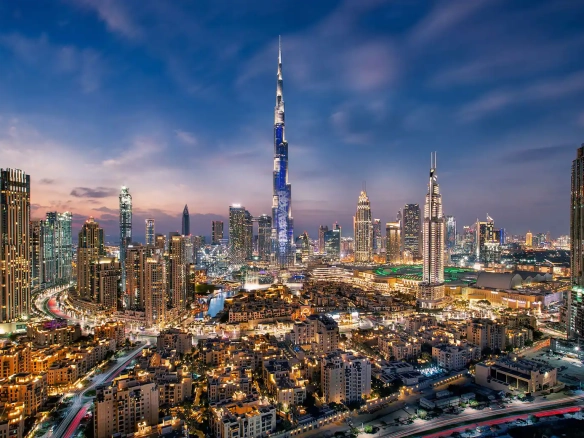
Downtown Dubai is the product of Emaar’s vision to create a global landmark district. Launched in the early 2000s and built around the world’s tallest building, it has delivered on that ambition. The Burj Khalifa, Dubai Fountain, Souk Al Bahar, The Dubai Mall, and The Opera District together create a density of lifestyle amenities that almost no other residential location in the world can match.
Residential options include the iconic Burj Khalifa residences, the Address Residences series, Vida Downtown, Act One|Act Two, and numerous other premium towers. Units range from studios and one-bedrooms aimed at investors to expansive three and four-bedroom apartments and penthouses that attract high-net-worth owner-occupiers.
The neighbourhood is almost entirely apartment-based. There are no villas in Downtown. It is dense, urban, and unambiguously premium.
Business Bay
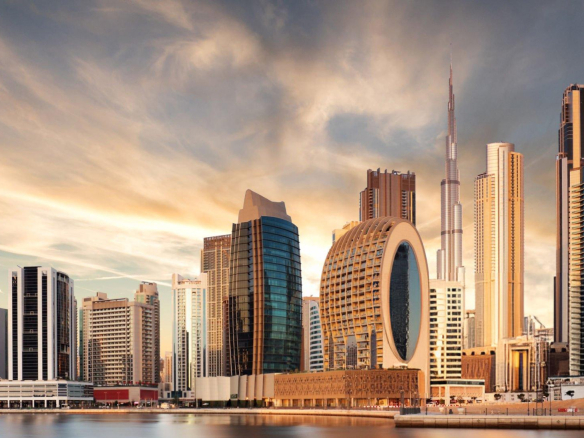
Business Bay was conceived as Dubai’s new central business district a Canal-side extension of Downtown designed to absorb the overflow of commercial and residential demand from the city centre. While it has not entirely fulfilled its original CBD vision (much of Dubai’s corporate activity remains in DIFC and Sheikh Zayed Road), it has evolved into something arguably more interesting: a diverse, high-energy community where residential towers, hotel apartments, boutique offices, restaurants, and retail exist side by side.
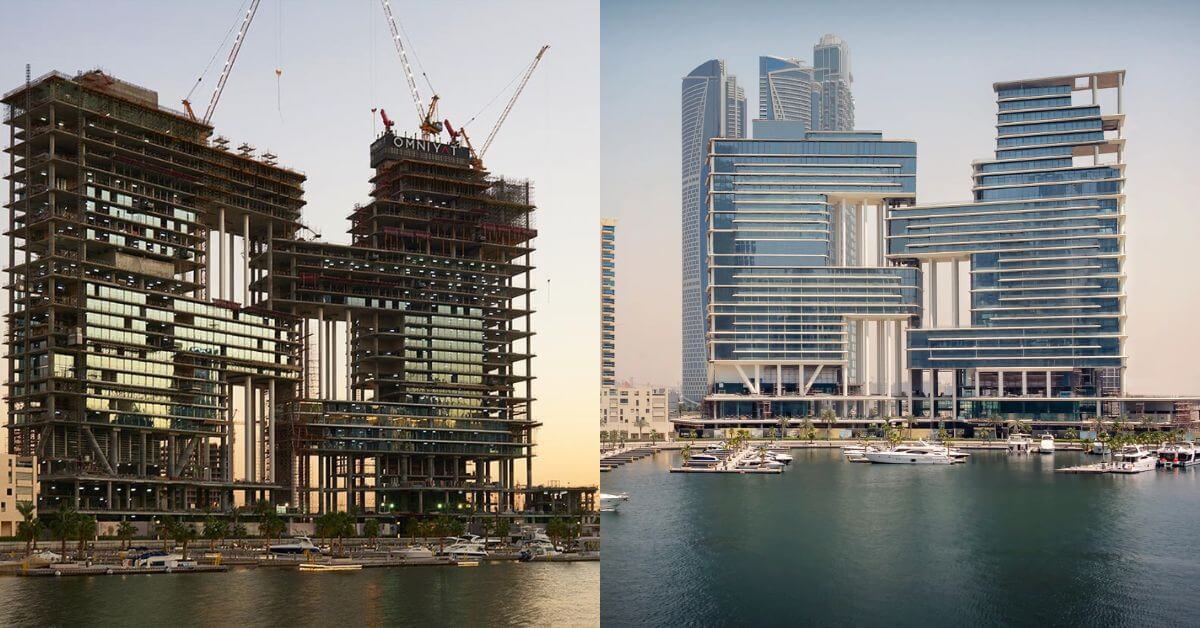
The Dubai Canal, which cuts through Business Bay and connects to the Arabian Gulf, has added a premium waterfront dimension to the neighbourhood. Canal-facing units in towers like Waves, Executive Towers, The Opus, Dorchester Collection, and the newer Binghatti and Damac projects now command premiums that would have been unimaginable a decade ago.
Business Bay is larger, more varied, and more affordable per square foot than Downtown but it is closing that gap.
Price Comparison: How Much Does it Cost to Buy?
As of March 2026, the average transacted prices per square foot in both neighbourhoods reflect their positioning:
Downtown Dubai: Typical apartments trade between AED 2,800 and AED 4,500 per sq ft, with premium units in the Burj Khalifa, Address Residences, and newer Emaar projects reaching AED 5,000–7,000+ per sq ft. A one-bedroom apartment in a mid-tier Downtown tower typically starts around AED 1.6–2.2 million. A two-bedroom in a premium building will commonly be AED 3–5 million.
Business Bay: Mid-market apartments in Business Bay currently trade at approximately AED 1,500–2,500 per sq ft, with premium canal-facing units in luxury towers reaching AED 2,500–3,500 per sq ft. A one-bedroom apartment can be found from as low as AED 900,000 in older buildings, while new-build premium units reach AED 1.8–2.5 million. Two-bedroom units are broadly AED 1.5–3.5 million depending on building, floor, and view.
The verdict on price: Business Bay offers significantly more square footage per dirham. For a budget of AED 2 million, you are likely choosing between a compact one-bedroom in a mid-tier Downtown building or a spacious two-bedroom in a well-located Business Bay tower. For investors focused on unit economics and yield, this matters enormously.
Rental Yields: Where Does the Money Work Harder?
Rental yield is the annual rent received divided by the purchase price. In general, higher-priced markets tend to produce lower yields because capital values have appreciated faster than rents.
Downtown Dubai rental yields (2026 estimate): Gross rental yields in Downtown are typically in the range of 5–6.5% for apartments, with smaller units (studios and one-bedrooms) performing at the higher end. The neighbourhood’s premium positioning means rents are high in absolute terms, but capital values are high enough that yields are compressed relative to other areas. A one-bedroom apartment bought at AED 1.8 million and rented at AED 95,000 per year produces a gross yield of approximately 5.3%.
Business Bay rental yields (2026 estimate): Business Bay consistently outperforms Downtown on gross yield, typically delivering 6.5–8.5% for comparable unit types. The combination of lower entry prices and strong rental demand driven by professionals working in DIFC, Downtown, and along Sheikh Zayed Road keeps occupancy rates high. A one-bedroom apartment bought at AED 1.1 million and rented at AED 85,000 per year produces a gross yield of approximately 7.7%.
The verdict on yield: Business Bay wins on gross yield, and this gap has been consistent over several years. For investors prioritising cash flow and income return, Business Bay is the more compelling proposition.
Capital Appreciation: Which Has More Upside?
Yield and capital appreciation often move in opposite directions. Markets with strong appreciation potential tend to see capital values rise faster than rents, compressing yields. This is the Downtown story.
Downtown Dubai’s capital appreciation over the past five years has been remarkable. Driven by Emaar’s brand, the neighbourhood’s global recognition, and a sustained influx of ultra-high-net-worth buyers from Europe, Russia, Asia, and the broader Middle East, price per square foot in Downtown has increased by approximately 60–80% from 2020 lows. The neighbourhood benefits from extremely limited new supply there is very little undeveloped land left in Downtown, meaning new inventory is constrained and existing units hold their value well.
Business Bay, by contrast, has a larger undeveloped and redevelopable land bank. There is a substantial pipeline of new off-plan projects launching and completing in the neighbourhood, which creates more competition for rental and resale inventory. However, the canal-front and premium segments of Business Bay have appreciated strongly, and the overall neighbourhood trajectory is upward.
The verdict on appreciation: Downtown has the edge for capital preservation and steady long-term appreciation, particularly for premium assets. Business Bay has higher variance, more upside in the best locations and buildings, more competition in the commodity segments.
Lifestyle Comparison
Downtown Dubai lifestyle: Living in Downtown is a statement. You are at the epicentre of Dubai’s global identity, the New Year’s Eve fireworks, the fountain shows, the world-class restaurants in The Dubai Mall and surrounding streets, the cultural programming at the Dubai Opera. Everything is walkable, and the area attracts an international, cosmopolitan demographic.
The trade-off is that Downtown is extremely busy, particularly on weekends and during events. Traffic can be severe. The neighbourhood is predominantly tourist-facing, which sustains short-term rental income but can make it feel less like a quiet residential community. It is not where most families with children choose to live.
Business Bay lifestyle: Business Bay has evolved dramatically in the past five years. The Dubai Canal promenade running from Business Bay through to Al Quoz and the sea has become one of the most popular outdoor spaces in the city. The neighbourhood now has a strong selection of restaurants, cafes, gyms, and retail, and new projects continue to add to this. The Marasi waterfront development has added a marina, a floating police station (now a tourist attraction), and a growing food and beverage strip.
Business Bay feels more like a living neighbourhood and less like a tourist destination. It is busier during the week (due to its office component) and somewhat quieter on weekends. Commutes to DIFC, SZR, and Downtown are all under 10 minutes.
The verdict on lifestyle: Downtown wins on prestige and entertainment. Business Bay wins on everyday liveability and value-for-lifestyle.
Who Should Buy Where?
Choose Downtown Dubai if:
- You want a globally recognised address and prestige is important
- You are targeting the luxury short-term rental (holiday home) market
- You are buying as a trophy asset and long-term capital preservation is your primary goal
- Budget is not a constraint and you want to be at the heart of Dubai’s most iconic district
Choose Business Bay if:
- You are a yield-focused investor wanting strong rental income relative to capital outlay
- You want more space per dirham, larger units or a better-specified building at a lower price
- You are buying for personal use and want walkability, a canal view, and a buzzing neighbourhood without tourist-level crowds
- You are looking at off-plan Business Bay, which has a rich pipeline of new projects with attractive payment plans from multiple developers
What Does the Future Look Like for Each?
Downtown’s outlook: The area is effectively built out, which is a structural positive for existing owners. Supply constraints mean demand will continue to absorb any new completions quickly. Emaar continues to develop the area’s hospitality and retail offer. The main risk is macro slowdown in global luxury spending or a significant correction in Dubai’s high-end market would disproportionately affect Downtown given its premium positioning.
Business Bay’s outlook: The Marasi waterfront masterplan continues to develop, and Business Bay’s transformation from a purely commercial district to a genuine mixed-use community is ongoing. The canal-front sub-market in particular has strong momentum. The risk is oversupply in the commodity apartment segment, there are a large number of projects launching and completing, and the quality and positioning of buildings vary enormously. Being selective matters more in Business Bay than in Downtown.
The Bottom Line
Neither neighbourhood is objectively “better”. They serve different investment theses and lifestyle preferences. Downtown Dubai is a premium, lower-yield, lower-risk proposition with global brand recognition and strong capital preservation. Business Bay is a higher-yield, higher-variance opportunity with significant pockets of genuine quality and compelling value relative to its neighbour.
Many sophisticated investors hold assets in both using Business Bay for yield-driven income generation and Downtown for long-term capital anchoring.
Whatever your strategy, the most important decision is not which neighbourhood to choose, but which specific building and unit within that neighbourhood represents real value. That is where deep local knowledge matters most.
Adroit Real Estate LLC has been operating in Business Bay and across Dubai since 2014. Our team offers in-depth knowledge of both neighbourhoods and can help you identify the right investment at the right price. Contact us at sales@adroit-re.com or call +971 44 27 1101.


Join The Discussion